Yeosu Hyanggyo: Ever Wonder Why Myeongnyundang and Daeseongjeon Have Different Roofs?
but the rites go on
Hi, I'm Sudal. Today I've brought a story that's a little quieter than usual. It's about Yeosu Hyanggyo, tucked away in a quiet alley in Gunja-dong, downtown Yeosu. After all my talk about the sea and food, bringing up a story like this makes even me feel a bit more composed. I've heard it's been an educational institution standing on this spot since the Joseon dynasty, so today let's take it slow.
What Exactly Was a Hyanggyo?
A hyanggyo, I've learned, was a state-built educational institution that held memorial rites for Confucius and other sages, while also handling the education and moral instruction of the local people. In today's terms, it was something like a national school that doubled as a shrine. During the Joseon dynasty, the state supported these places with land, servants, and books to teach students, so a hyanggyo must have carried real weight in its region back then. Honestly, learning that Yeosu had one too was a quietly surprising thing for me.
Yeosu Hyanggyo is said to have first been built in 1897 (the 1st year of Gwangmu), with only the Daeseongjeon and the east and west dormitory halls in place. It wasn't until 1934 that education spaces like Myeongnyundang were newly built, which means the site didn't have its current full form from the very start. The fact that the space for holding rites came first, and the space for teaching was added much later, is something that's stayed with me somehow.
The heart for holding the rites came first; the heart for teaching was added later.
— 🦦 SudalMyeongnyundang and Daeseongjeon Even Look Different, Roof and All
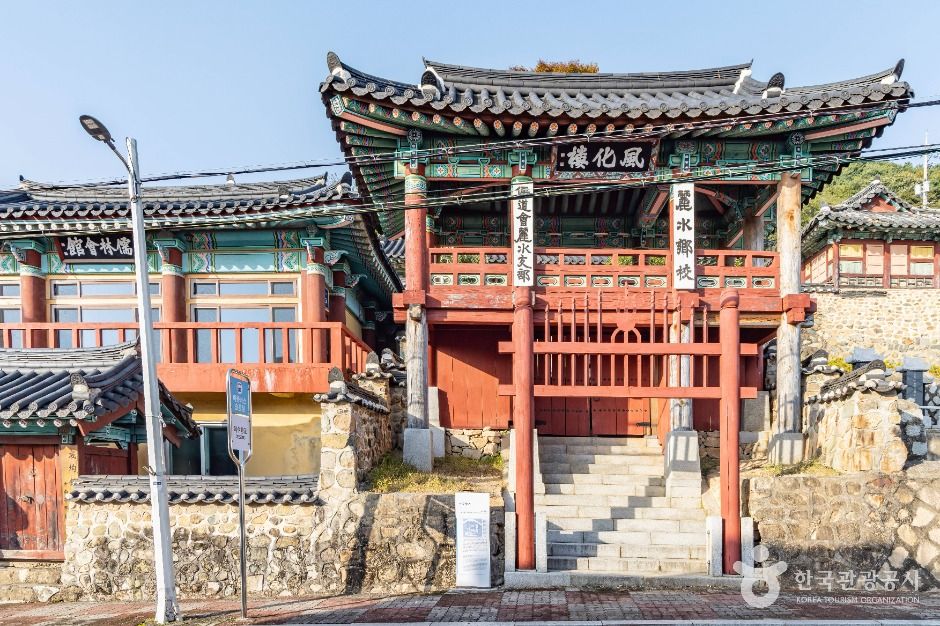
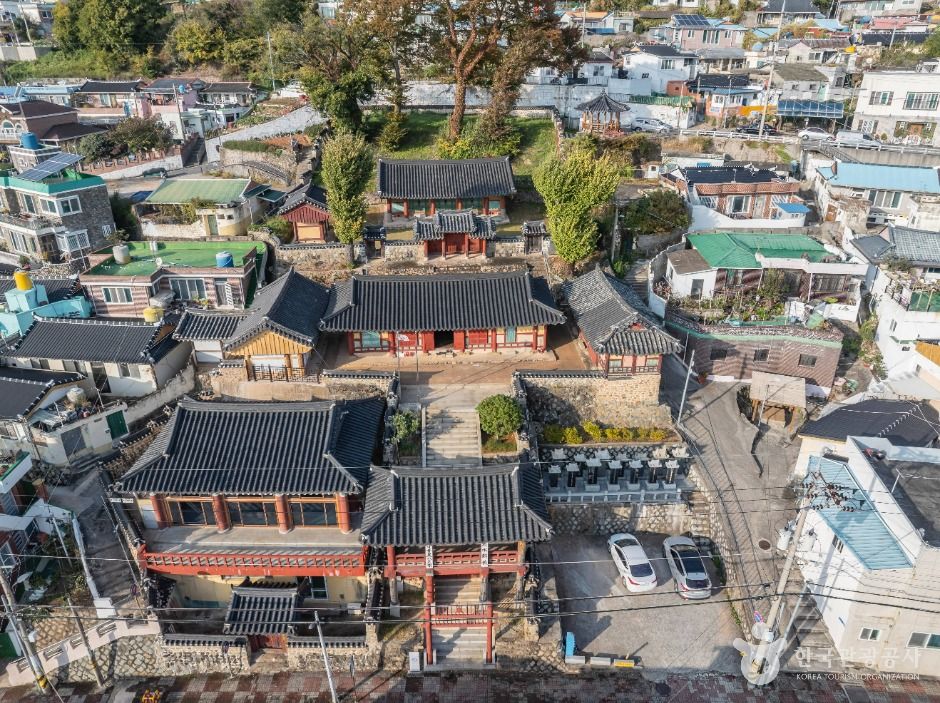
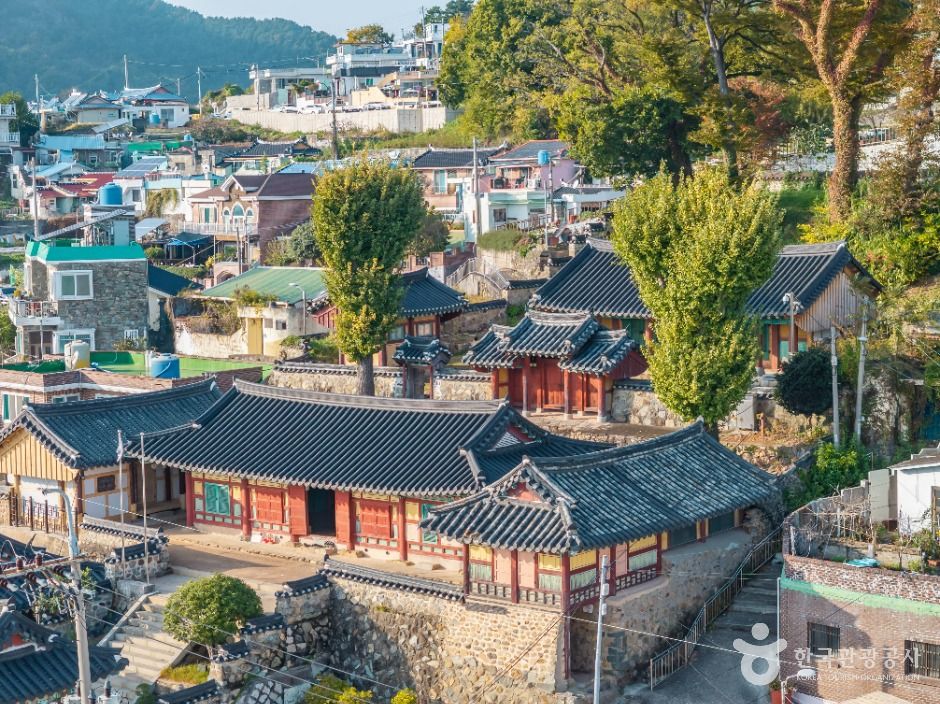
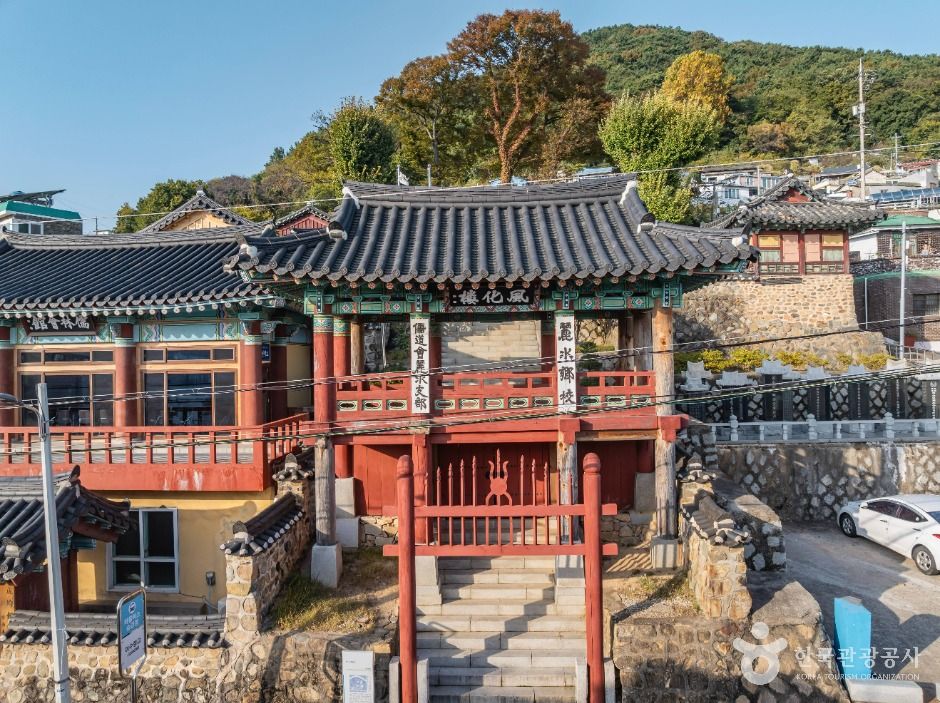
Walking into the hyanggyo, the first building you meet is Myeongnyundang. It was the education space where students studied, and beside it stand the east and west dormitory halls, Dongjae and Seojae, which served as student housing. Terms like 'classroom' and 'dormitory' feel familiar to us today, but isn't it interesting that even back then, they built separate spaces for studying and sleeping? If you look closely at the roof of Myeongnyundang, you'll notice that from the side, it forms the shape of the Chinese character for eight (八) — this style is called a paljak roof.
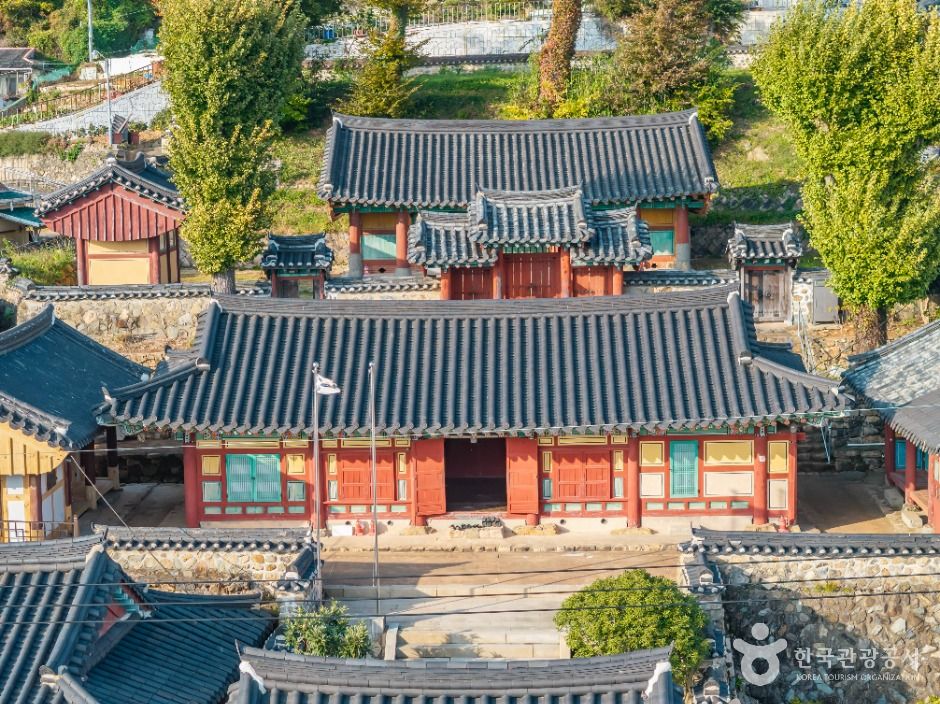
Passing through Myeongnyundang and one more gate called Naesammun, you finally arrive at Daeseongjeon, the space where the memorial rites are held. It's the building that enshrines the memorial tablets of sages from both China and Korea, making it the most weighty spot in the entire hyanggyo. Daeseongjeon's roof is different again from Myeongnyundang's — its side roofline forms the shape of the Chinese character for person (人), a style called a matbae roof. Knowing that the teaching space and the ritual space carry such different roof shapes within the same hyanggyo, I now find myself looking up at the roofline every time I walk through.
Daeseongjeon originally had a modest scale of 3 bays across the front and 3 bays to the side, but in 1949 it was rebuilt with the front expanded to 5 bays. That means people kept repairing and preserving this space long after the Joseon dynasty had already ended. But times have changed a great deal since then. During the Joseon dynasty, this was a place where students were actually taught with state support, but today, Yeosu Hyanggyo's educational role is gone, and only its function of holding memorial rites remains. Thinking that Myeongnyundang, once filled with the sound of children reading aloud, now stands quietly with just that one role left, leaves a small ache somewhere in my heart.
SOODAL's Tip · Since this is a cultural heritage site, please avoid touching the buildings or memorial tablets, and since it's a space that still holds memorial rites, please keep a respectful, quiet manner while looking around.